When wind-assisted propulsion is discussed, the focus often falls on aerodynamics, fuel savings, and emissions reduction. But another factor is just as important for long-term success: materials.
At Windtracx, we are exploring how advanced composite materials can support the next generation of maritime technologies by improving durability, consistency, and lifecycle sustainability.
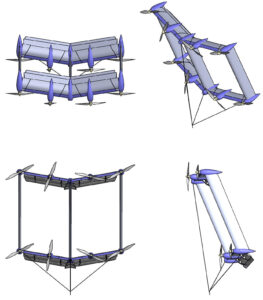
To support this direction, Windtracx has signed a Letter of Intent (LOI) with Northern Light Composites (nlcomp) to evaluate the use of rComposite®, their thermoplastic resin, for the production of structural components of our Aero Kite Drone system.
Why Materials Matter in Maritime Innovation
For wind-assisted propulsion to become truly scalable, systems must do more than perform well in ideal conditions. They also need to be reliable over time, compatible with industrial production, and designed with lifecycle impact in mind.
This is especially important for airborne systems operating continuously under load, where material fatigue, structural consistency, and long-term durability are critical.
That is why composite materials are becoming an increasingly important part of the conversation around maritime innovation, clean shipping, and wind-assisted propulsion.
Thermoplastic vs Thermoset Composites
A key part of this collaboration is the evaluation of thermoplastic composites as an alternative to traditional thermoset composites.
This matters for two main reasons.
First, thermoplastic materials can support circular economy goals by improving recyclability and reducing lifecycle impact.
Second, they can offer higher resistance to fatigue, which is essential for systems designed to operate for long periods under repeated mechanical stress.
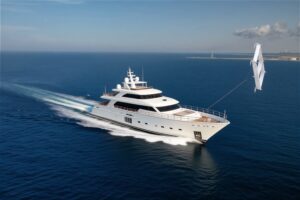
For Windtracx, both aspects are highly relevant. Our Aero Kite Drone system is being developed not only for performance, but also for reliability and long-term operational viability in demanding maritime environments.
A Step Toward More Durable and Sustainable Systems
Through this LOI, Windtracx will evaluate how rComposite® can be used for structural drone components, with a focus on material durability, consistency, and alignment with circular economy principles.
This is an important step in understanding how material choices can influence not only engineering performance, but also manufacturability, sustainability, and long-term system value.
Building the Future of Wind-Assisted Propulsion
At Windtracx, we believe the future of wind-assisted maritime propulsion will depend on more than energy generation alone.
It will also depend on the materials behind the system, how those materials perform under real operating conditions, and whether they can support a more sustainable industrial model.
That is why this collaboration matters.
Because advancing maritime technologies means rethinking not only how energy is captured, but also what systems are made of.